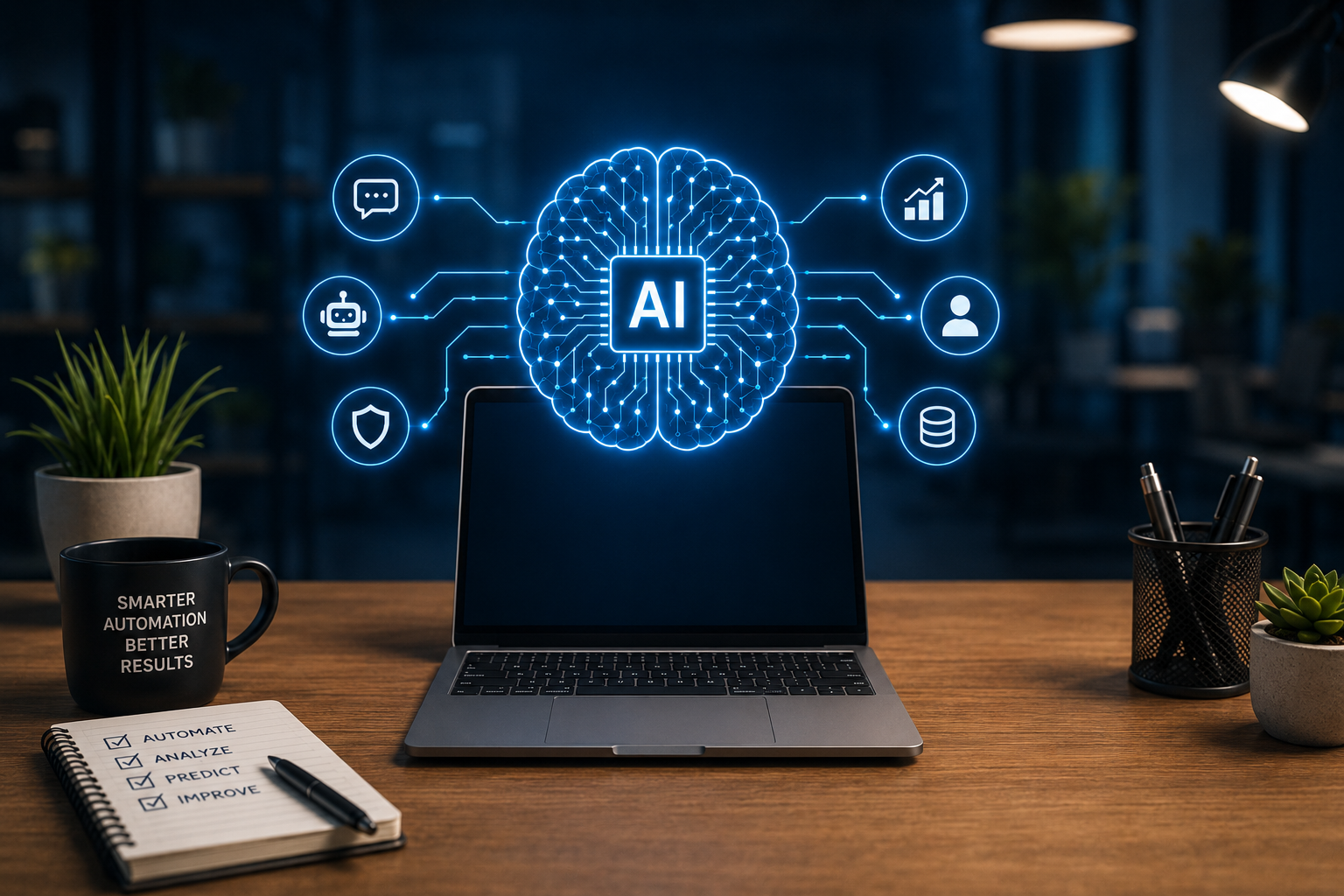
Artificial intelligence is becoming a practical business technology that can help organizations automate repetitive work, analyze information and create more intelligent digital experiences.
Understanding AI Integration
AI integration means connecting artificial intelligence capabilities with existing business applications, workflows and digital products.
Businesses can use AI to support customer service, data analysis, document processing, recommendations, content workflows and many other activities.
Automating Repetitive Tasks
Many business teams spend significant time performing repetitive tasks such as data entry, document processing and routine communication.
AI-powered automation can help reduce this workload and allow employees to focus on more valuable activities.
Smarter Business Decisions
AI can process large amounts of information and help businesses identify patterns and useful insights.
When combined with accurate business data, these capabilities can support faster and more informed decision-making.
AI-Powered Customer Experiences
Businesses can use AI to create more personalized and responsive customer experiences.
AI chatbots, intelligent recommendations and automated support workflows are examples of how businesses can use AI to improve customer interactions.
Responsible AI Implementation
AI should be implemented around a clear business objective rather than simply adopting technology because it is trending.
Security, privacy, accuracy, human oversight and reliable data should remain important considerations when implementing AI solutions.
What Businesses Should Remember
- AI can automate repetitive business activities.
- AI can help teams analyze information more efficiently.
- AI can support personalized customer experiences.
- AI works best when connected to real business objectives.
- Security and human oversight remain important for AI systems.